Numbers that actually
make sense
Practical guides that pair perfectly with our free calculators — no jargon, just clear answers.




Stanford University researchers published a study in 2017 testing seven popular fitness trackers — Apple Watch, Fitbit Surge, Basis Peak, Microsoft Band, Mio Alpha 2, PulseOn, and Samsung Gear S2 — against metabolic cart measurements (the gold standard for calorie expenditure measurement). Heart rate accuracy ranged from reasonable to good. Calorie burn accuracy was another story entirely. The most accurate device was off by 27%. The least accurate was off by 93%.

Ask most gym-goers what their maximum heart rate is and they will say 220 minus their age — a formula so widely repeated it appears on cardio equipment displays, fitness watch apps, and exercise science textbooks worldwide. The problem is that this formula has a standard deviation of approximately 10 to 12 beats per minute — meaning the calculated maximum for a 40-year-old of 180 beats per minute could accurately describe anyone from 168 to 192 beats per minute in real terms. Training zones derived from an inaccurate maximum produce inaccurate zone targets

The window during which conception is possible in any given menstrual cycle is remarkably narrow — approximately six days. Five days before ovulation when sperm can survive in the female reproductive tract waiting for egg release, the day of ovulation itself, and potentially one day after. Outside this window pregnancy from unprotected intercourse is essentially impossible regardless of frequency. Most women trying to conceive either do not know when this window occurs or have only a vague sense of it

Only approximately 5% of babies are born on their calculated due date. Yet the due date — that single circled day on the calendar — becomes one of the most anticipated and emotionally significant numbers in any pregnancy. Understanding how it is calculated, what it actually represents statistically, and what happens in the weeks surrounding it transforms the due date from an anxiety-inducing deadline into the useful clinical landmark it was designed to be.

The advice to drink eight glasses of water per day — approximately 2 litres or 64 ounces — is one of the most repeated health recommendations in existence and one of the least supported by actual evidence. Nutritional scientists have searched for the origin of this specific recommendation and consistently failed to find a credible scientific source. The most plausible explanation is that it derives from a 1945 US Food and Nutrition Board recommendation that suggested people consume 2.5 litres of water daily

The recommended dietary allowance for protein — 0.36 grams per pound of body weight per day — is one of the most misunderstood numbers in nutrition. It represents the minimum amount required to prevent deficiency in sedentary adults — not the optimal amount for health, body composition, or longevity. Research published over the past two decades consistently shows that most adults — particularly women over 40,

Two people can weigh exactly the same and look completely different. Two people can weigh the same and have dramatically different health risks. Two people can lose the same number of pounds on the scale and have opposite body composition outcomes — one losing predominantly fat and getting leaner, the other losing muscle and getting softer despite identical scale movement.

Type your height into the ideal weight calculator on CalcMint Pro and you will receive four different numbers — one from the Hamwi formula, one from the Devine formula, one from the Robinson formula, and one from the Miller formula. All four were developed by medical professionals. All four are based on height. And all four give meaningfully different answers for the same person. A 5'10" man gets ideal weight estimates ranging from 166 pounds to 172 pounds depending on which formula is used. A 5'6..

Everyone has heard the phrase "fast metabolism" or "slow metabolism" — usually offered as an explanation for why some people seem to eat anything without gaining weight while others gain weight eating what appears to be very little. The reality behind these observations is largely captured in one number — your Basal Metabolic Rate. BMR is the precise number of calories your body burns every single day just to keep you alive

Most people who start tracking their diet begin and end with calories. Eat less than you burn and lose weight — the logic is sound. But two people eating identical calorie totals can have dramatically different body composition outcomes depending on how those calories are distributed between protein, carbohydrates, and fat. A 2,000-calorie diet of 40% protein, 35% carbohydrates, and 25% fat produces a very different body — more muscle preserved during weight loss, better hunger management

The most common reason diets fail is not lack of willpower. It is not the wrong food choices. It is eating the wrong number of calories for your specific body, activity level, and goal — usually based on generic advice like "eat 2,000 calories" that has no relationship to your individual energy needs whatsoever. The 2,000 calorie figure printed on nutrition labels is a regulatory standard based on population averages — not a recommendation for any specific person. A 5-foot-2 sedentary woman in her 50s needs approximately 1,600 calories to maintain her weight.

Every diet, every nutrition plan, every weight management strategy in existence is built on one foundational number that most people have never calculated correctly — their Total Daily Energy Expenditure. TDEE is the total number of calories your body burns in a complete day accounting for everything — your resting metabolism, your deliberate exercise, your unconscious movement, and the energy cost of digesting food itself. It is not a rough estimate. It is not 2,000 calories because ..

The question sounds simple. The answer is not. A $65,000 salary in Memphis, Tennessee feels comfortable — low housing costs, zero state income tax, and a cost of living well below the national average mean that $65,000 stretches far. The same $65,000 in San Francisco feels like poverty — after California state income tax, Bay Area rent averaging $3,200 per month..

Most people accept the first number their employer offers. Research from Fidelity consistently shows that 85% of workers who negotiate salary get more money — yet fewer than 40% of workers actually try. The gap between those two numbers represents thousands of dollars per year that workers leave on the table out of discomfort, uncertainty, or simply not knowing what to say

The average salary in the US in 2026 is approximately $63,795 per year according to Bureau of Labor Statistics data — but that single number is almost meaningless on its own. A 24-year-old teacher in Mississippi and a 45-year-old software engineer in Seattle both get averaged into that figure despite living in completely different financial realities. T


Ask most workers how much their paid time off is worth and they will shrug. Ask them how much their health insurance costs and they will give you a number within $50. The disconnect is surprising — PTO is one of the most valuable components of any compensation package and most people never quantify it in dollar terms. A worker with 20 days of unused PTO earning $75,000 per year

A $75,000 salary means completely different things depending on where you live. In Jackson, Mississippi it puts you comfortably in the upper middle class — low housing costs, no traffic, and a cost of living roughly 17% below the national average mean that $75,000 stretches into genuine financial comfort. In San Francisco the same salary qualifies you for low-income housing assistance under local guidelines

In the United Kingdom — National Insurance on top of income tax. Most workers have a vague sense that taxes take somewhere between a quarter and a third of their salary. The reality for many middle-income earners in the US and UK is closer to 35% to 42% of gross income — and in high-tax states like California and New York or in higher UK tax brackets
Body Mass Index is simultaneously one of the most useful screening tools in public health and one of the most misapplied numbers in personal health. A 45-year-old woman with dense muscle mass and excellent cardiovascular health gets told she is overweight. A 28-year-old man with almost no muscle and significant visceral fat gets told he is normal weight. Both conclusions come from the same formula applied without any context whatsoever

Most workers know their state takes income tax from their paycheck. In Maryland, your county takes income tax too — and unlike the optional city taxes in states like Ohio or the NYC-specific levy in New York, Maryland's county income tax is mandatory for every single resident in every single one of Maryland's 23 counties and Baltimore City

Massachusetts built its tax reputation on being relatively straightforward — a flat 5% income tax rate that applied equally to everyone from minimum wage workers to millionaires. That simplicity ended in January 2023 when Massachusetts voters approved a constitutional amendment adding a 4% surtax on all income above $1 million per year — effectively creating a two-tier system with a 5% rate..

Tennessee joined the growing list of zero-income-tax states when it fully repealed its Hall Income Tax on investment income in January 2021 — making it the most recent state to eliminate personal income tax entirely. For wage earners the news is even simpler: Tennessee has never taxed wage or salary income at the state level. Not in 2021. Not in 2001. Not ever. A Nashville nurse, a Memphis logistics worker, and a Knoxville engineer have all collected their paychecks without a single dollar going to Tennessee state..


Arizona made a dramatic tax policy change that most workers outside the state have not heard about — it dropped from a multi-bracket income tax system with a top rate of 4.5% down to a single flat rate of 2.5% on all taxable wage income starting in 2023. That flat 2.5% rate is now one of the lowest state income tax rates in the entire United States, sitting just above the zero rates of Texas, Florida, and Washington. For workers in Phoenix, Tucson, Scottsdale, and across
Most workers assume top state income tax rates only apply to high earners. In Virginia that assumption is wrong — and it costs people real money every paycheck because they never question it. Virginia's top marginal income tax rate of 5.75% kicks in at just $17,000 of taxable income. That means a part-time retail worker earning $28,000 per year and a senior software engineer earning $180,000 per year both pay 5.75% on most of their Virginia wages

Colorado is one of the most financially misunderstood states for workers relocating from either coast. Its flat 4.4% income tax rate is genuinely competitive — lower than Virginia's effective rate, lower than Illinois, lower than California by a massive margin. But Colorado has something no other state in America has: the Taxpayer's Bill of Rights, known as TABOR, a constitutional amendment that forces the state government to refund excess tax revenue directly..

When people think of high-tax states they think of California and New York. But New Jersey quietly sits alongside both of them with a top marginal income tax rate of 10.75% — the third highest state income tax rate in the entire country and the highest of any state that does not also impose a city income tax on top. Garden State workers in higher income brackets face a combined federal and state marginal rate above 47% on their top dollars of income

Minnesota is the tax outlier of the midwest. While neighbouring South Dakota charges zero state income tax and Wisconsin tops out at 7.65%, Minnesota sits at a 9.85% top marginal rate — a number more commonly associated with California and New York than with a landlocked midwestern state. For high earners in Minneapolis, Saint Paul, and Rochester, Minnesota's tax structure means a paycheck that looks.

after federal income tax, state income tax, Social Security, and Medicare are all deducted — before you accept an offer, negotiate a raise, or plan a monthly budget. This guide explains every deduction that stands between your gross salary and the money that actually lands in your bank account.

You worked hard all year, hit your targets, and your employer announces a $10,000 bonus. Then the check arrives and it says $6,700. Where did $3,300 go? The answer is not that your employer made a mistake — it is that bonuses are taxed differently from regular wages, ..

A $5,000 raise sounds like a significant win. But after federal income tax, state income tax, and FICA deductions, that $5,000 raise might add only $138 to your biweekly paycheck — about $3,588 more per year in actual take-home pay. Whether that is enough depends on what you gave up to get it,
Washington state is one of only nine states in the US with zero personal income tax — and for workers in Seattle, Tacoma, Spokane and everywhere in between, that single fact makes a meaningful difference every single payday. A software engineer earning $120,000 in Seattle keeps thousands more per year than an identical earner in California or New York..

The Georgia paycheck calculator helps workers estimate how much money actually reaches their bank account after taxes and payroll deductions. Unlike Texas or Florida, Georgia employees pay:

The Pennsylvania paycheck calculator helps workers estimate how much money actually reaches their bank account after taxes and payroll deductions. Unlike states with progressive income tax systems, Pennsylvania uses a flat state income tax rate. However, many employees also pay:

The Michigan paycheck calculator helps workers estimate how much money actually reaches their bank account after taxes and payroll deductions. Michigan uses a flat state income tax system, but some workers may also pay:


Knowing your hourly rate matters more than most people realise. It is the number that tells you whether a raise is meaningful, whether a freelance rate is competitive, and whether a new job offer actually pays more than your current one once hours worked are factored in.

Whether you are trying to decide if extra shifts are worth it, verifying your paycheck is correct, or negotiating a salaried offer against your current hourly earnings, this guide covers everything you need to know about how overtime pay works in 2026.

Your salary is not the amount you actually keep. The state you live in can dramatically change your real paycheck because every US state handles income tax differently. Some states charge:
The North Carolina paycheck calculator helps employees estimate how much money actually reaches their bank account after taxes and payroll deductions. Unlike Texas or Florida, North Carolina workers pay:

In 2026, Ohio uses a graduated income tax system with rates up to 3.5%, and some school districts add an additional tax between 0.5% and 3%.

For many workers, these deductions remove thousands of dollars annually from their paycheck. .This guide explains exactly how California paycheck taxes work in 2025 and how much money actually reaches your bank account.

The New York paycheck calculator is one of the most important salary tools for workers because New York employees can face some of the highest paycheck deductions in the United States. Depending on where you live, your paycheck may include:

The Florida paycheck calculator is one of the simplest state paycheck tools to understand because Florida has no state income tax. That means workers in Florida only deal with federal income tax, Social Security, and Medicare deductions.

The Illinois paycheck calculator works differently from calculators in Texas or Florida because Illinois charges a flat 4.95% state income tax on taxable wages.

exas is one of only nine states with zero state income tax, which means your texas paycheck calculator results look noticeably better than those from California or New York residents earning the exact same salary. But "no state tax" doesn't mean "no deduction

Pre-tax deductions are amounts subtracted from your gross pay before income tax is calculated — and they are the single most powerful legal tool most workers have to reduce their tax bill every paycheck. Contributing to a 401(k) or...
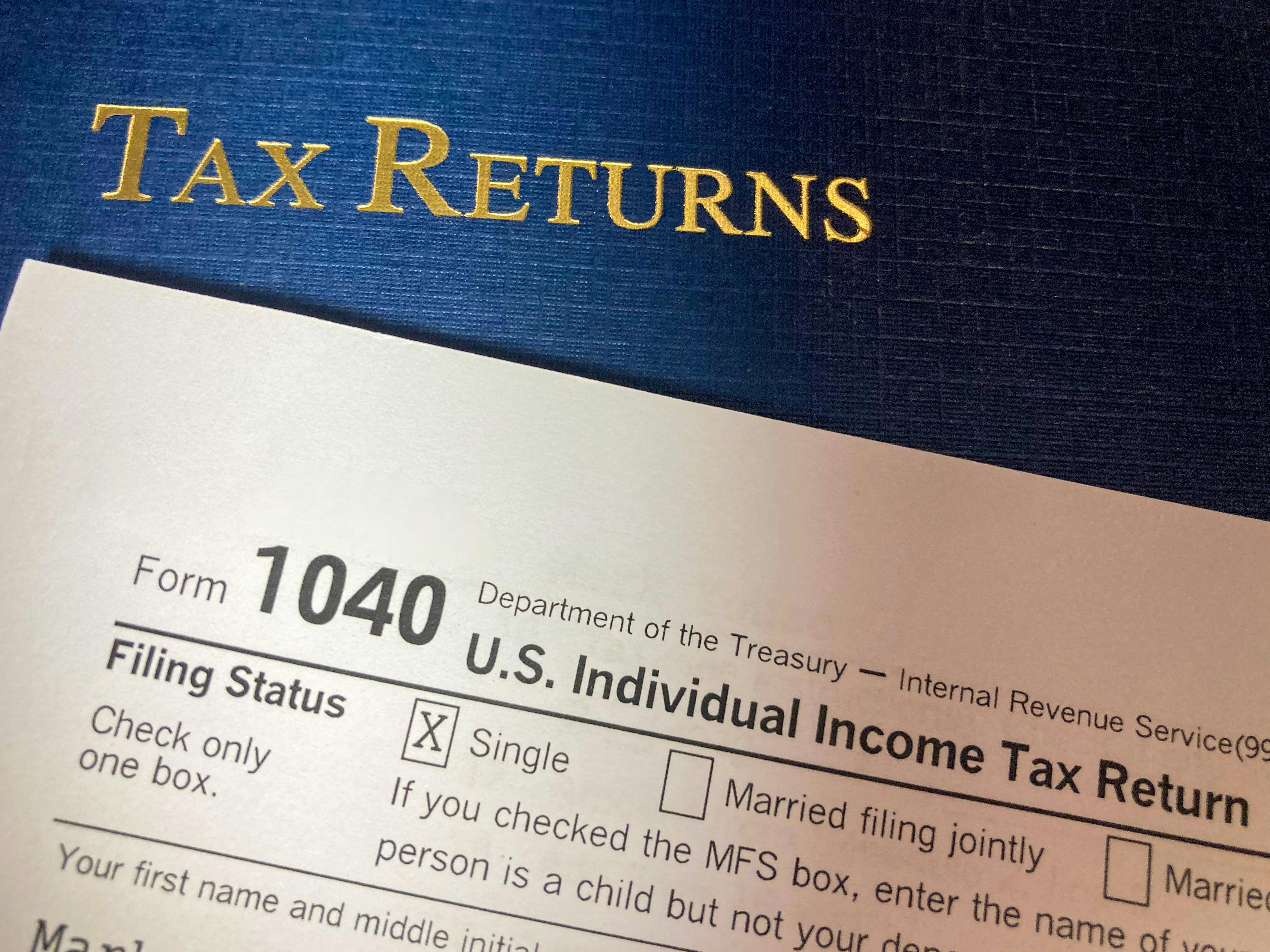
Most workers think they pay their bracket rate on everything they earn. They don't. Here is how the 2025 federal income tax brackets actually work — and what your paycheck withholding is really based on.

Most people have seen the acronym on a pay stub but never really stopped to ask what it means or where that money actually goes. The answer is less mysterious than it looks..

FICA tax is the mandatory federal payroll tax that funds Social Security and Medicare — and it comes out of every paycheck before you see a dollar. Most workers pay 7.65% of their gross wages in FICA: 6.2% for Social..